

Home / How-to
Six garage door jobs you can do yourself
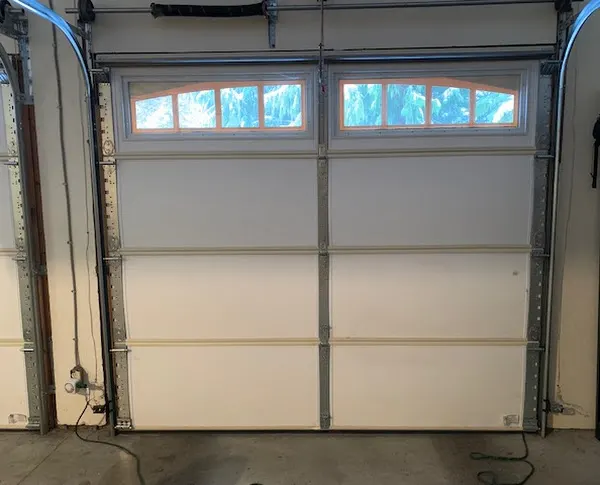
Most of these take about ten minutes. Anything involving the springs or cables is a job for a technician, so call us for those.
The six jobs
Each one shows where on the door the work is.
Reprogram a remote or keypad
- On LiftMaster units the Learn button is on the back of the opener head, usually under the light lens.
- Press it once.
- Within thirty seconds, press the button on the remote you want paired. The light blinks to confirm.
- A keypad is the same sequence, entering your chosen PIN and pressing enter instead.
TipIf the Learn button does nothing, check that the opener has power at the outlet. That is the usual cause.
Test the safety reversal (twice a year)
- Lay a roll of paper towels flat on the floor in the door opening and close the door onto it.
- The door should touch, stop, and go back up.
- Then wave something through the beam between the two photo-eyes while it closes. It should reverse without touching anything.
If it failsIf it doesn't reverse, stop using the opener and call us. Put this test on your calendar.
Lubricate the door
- Use a garage-door lubricant on the hinges, the rollers, the bearings at each end of the torsion shaft, and the springs themselves.
- Wipe off the excess.
- Twice a year is plenty in this climate.
TipKeep it off the tracks. Grease in the track collects grit and makes the door noisier.
Check the balance
- With the door closed, pull the red emergency release.
- Lift the door by hand to about waist height and let go.
- A balanced door stays roughly where you left it. If it drops or flies up, the springs are out of balance and the opener has been carrying weight it was not built to carry.
- If the door feels heavy as you lift, stop and call: the spring may be broken.
TipTo reconnect the opener, pull the release toward the door and run the opener once.
The door reverses right after touching the floor
- Usually it is the down-limit setting, and occasionally a photo-eye knocked out of line by a trash can or a bike.
- Both are simple adjustments.
Don'tDon't turn the force up to stop it. The safety reversal depends on that setting.
What to do when the power is out
- With the door closed, pull the red emergency release and lift the door by hand.
- If it feels heavy, stop and call: the spring may be broken.
- Close the door and lock it if you are leaving.
- With battery backup the opener keeps running normally for a while, which is the main reason we install it.
If the door is stuck openDon't pull the release. With a broken spring the door can fall. Keep people and cars clear and call the shop.
Know the parts
Knowing the names helps when you call. The parts in red are a job for a technician.
- Torsion springsThey carry almost all of the door's weight. Leave them to a technician.
- CablesUnder the same tension as the springs. Leave them to a technician.
- Shaft bearingsOne at each end of the spring shaft. Lubricate them twice a year.
- Rollers and hingesLubricate twice a year with a garage-door lubricant, then wipe off the excess.
- TrackNo grease in the track. It collects grit.
- Photo-eyesWave something through the beam while the door closes. It should reverse.
- Emergency releasePull it only with the door closed. If the door is stuck open, leave it alone and call us.
- Opener headOn LiftMaster units the Learn button is on the back, usually under the light lens.
Leave the springs and cables to a technician. A torsion spring holds enough stored energy to injure someone badly, however handy you are, and the cables are under the same tension.
Springs, cables, or a job that needs a technician? Call the shop.